Veteran Owned and Operated
Get the Ground Ready for What Comes Next
Land Grading & Leveling in Okmulgee for construction sites, yards, and properties where uneven ground causes drainage problems or delays projects
Geneva Backwoods Clearing LLC provides land grading and leveling services across Okmulgee for homeowners, builders, and landowners preparing sites for construction, correcting yard slopes that funnel water toward foundations, or smoothing pasture ground for safer equipment operation. You need high spots cut down, low areas filled to match finished grade, and surfaces sloped to move water away from structures without creating erosion. This work addresses properties where standing water kills grass, where foundation pads require precise elevation, or where rough ground prevents mowing and landscaping.
The grading process begins with a site survey to identify existing elevations, drainage patterns, and any underground utilities that affect grading limits. A dozer or motor grader scrapes high areas and redistributes soil to fill depressions, creating a smooth plane or controlled slope depending on the project. For construction pads, finish grading is performed to within a few inches of final elevation, often verified with a laser level or GPS guidance system. Drainage is designed to direct runoff into swales, ditches, or existing waterways, preventing water from pooling on the property or flowing toward neighboring lots. Oklahoma's clay soils compact well when moisture content is right, but they turn slippery and unstable when wet, so grading is often scheduled during dry periods.
If you're preparing a building site, fixing drainage issues, or leveling a yard in Okmulgee, reach out to discuss grading scope, soil conditions, and timeline.
What Grading Does for a Property
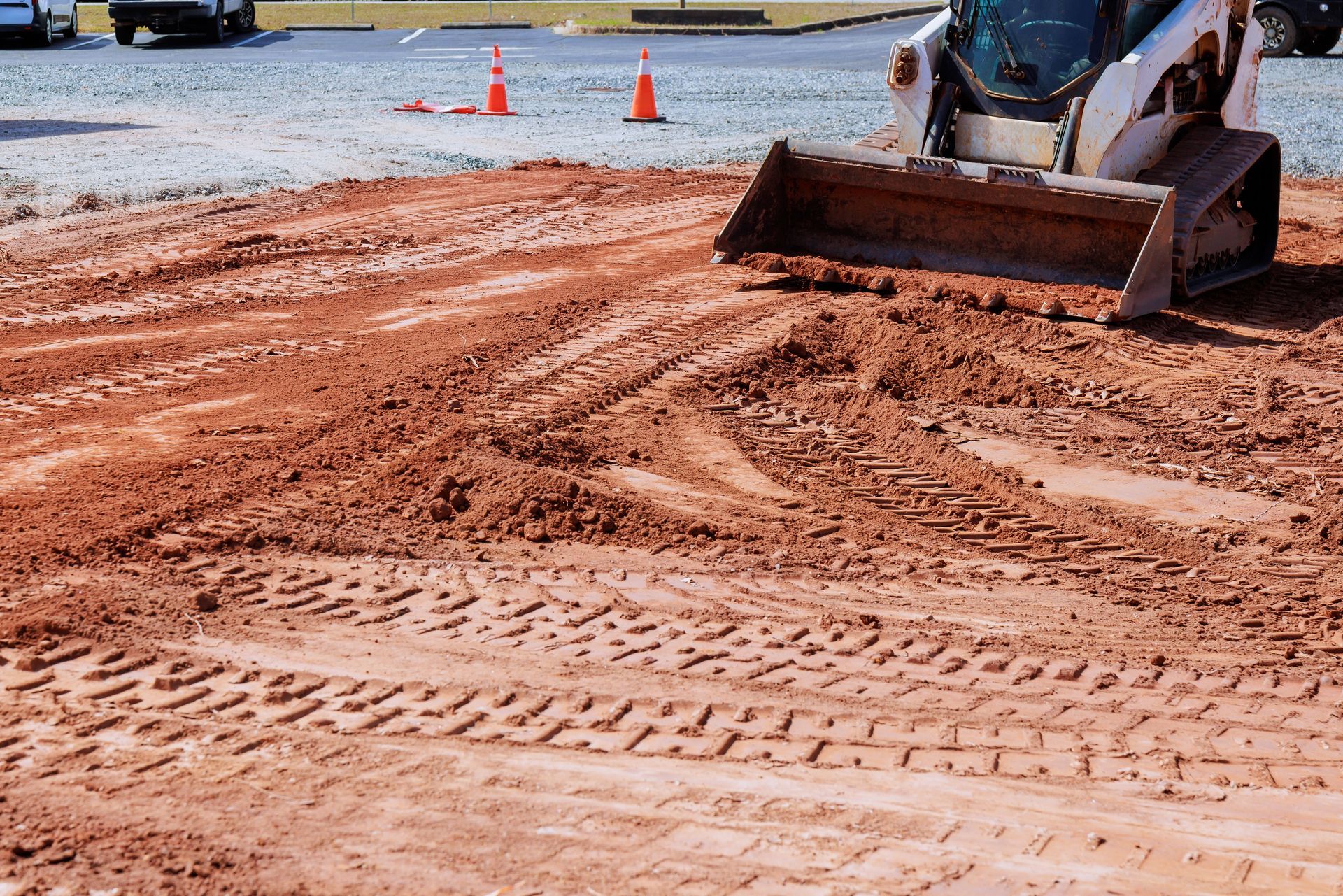
You'll see heavy equipment make multiple passes across the site, with blades angled to push soil from high areas into low spots. Grading stakes mark target elevations, and the operator checks depth frequently to avoid over-cutting or under-filling. Rough grading leaves the surface ready for additional work like foundation forming or utility trenching, while finish grading smooths the site for landscaping, sod, or gravel. Water flow is tested by observing how rain moves across the graded surface, and adjustments are made if pooling occurs or if runoff erodes freshly moved soil.
When Geneva Backwoods Clearing LLC finishes a grading project, you'll see level building pads ready for concrete forms, yards that shed water away from the house instead of pooling near the foundation, and pasture ground smooth enough for rotary mowers without scalping high spots or bogging in low areas. Drainage swales are visible as shallow channels that carry water during storms without cutting deep gullies. If erosion control was part of the scope, you'll see straw or silt fencing placed to hold soil until vegetation establishes.
Grading does not include topsoil delivery, seed application, or hardscape installation—those are separate services coordinated after rough grading is complete. Precision grading for sports fields or large commercial pads may require GPS-guided equipment, which increases cost but ensures accuracy within tenths of an inch. Soil testing is recommended for projects where compaction or bearing capacity affects foundation design, especially on clay soils common in Okmulgee.
Questions About Grading and Leveling Work
Here's what property owners and contractors in Okmulgee typically ask when planning grading projects.
What's the difference between rough grading and finish grading?
Rough grading establishes the general slope and elevation, while finish grading smooths the surface to within inches of final grade, ready for landscaping or construction.
How does grading fix drainage problems?
By creating controlled slopes that direct water away from structures and into designated drainage features like swales or ditches, preventing pooling and foundation damage.
Why does soil type matter for grading in Okmulgee?
Oklahoma's red clay compacts well when properly managed but becomes slippery and difficult to grade when wet, so timing and moisture control are critical for stable results.
When should grading happen in the construction process?
After clearing and utility rough-ins but before foundation work begins, so the site is level, accessible, and ready for concrete forms or gravel base layers.
What equipment is used for residential grading projects?
Dozers handle large cuts and fills, motor graders fine-tune slopes and surfaces, and skid steers with laser-guided blades perform precision finish grading for smaller areas.
Geneva Backwoods Clearing LLC handles grading for building pads, yard leveling, erosion correction, and site prep across Okmulgee. Contact them to walk the property, review grading plans, and schedule the work around weather and project timelines.