Veteran Owned and Operated
Creating Water Features That Last for Decades
Pond Construction in Okmulgee for property owners who need custom farm, retention, or decorative ponds built to hold water reliably
Geneva Backwoods Clearing LLC builds ponds in Okmulgee for landowners who need reliable water features that function properly year after year. You might be planning a farm pond for livestock watering, a retention pond to manage stormwater runoff, or a decorative pond that adds value and usability to your property. Each pond begins with a thorough site evaluation where soil composition, slope, and natural drainage patterns determine how the excavation and sealing process will unfold.
The construction process involves excavating soil to the planned depth and shape, then compacting and sealing the pond bottom to prevent water from seeping into porous ground layers. Without proper soil shaping and sealing, even a well-dug pond can lose water faster than rainfall or runoff can replenish it. Drainage and overflow systems are installed to manage excess water during heavy rains, protecting the integrity of the dam and preventing erosion around the pond edges. Oklahoma weather patterns bring both prolonged dry spells and sudden heavy rainfall, so planning for controlled water flow keeps the pond functional through seasonal extremes.
If you are considering a pond for your property in Okmulgee, reach out to discuss site conditions and the type of pond that fits your land use goals.
How the Pond Is Shaped and Sealed for Long-Term Water Retention
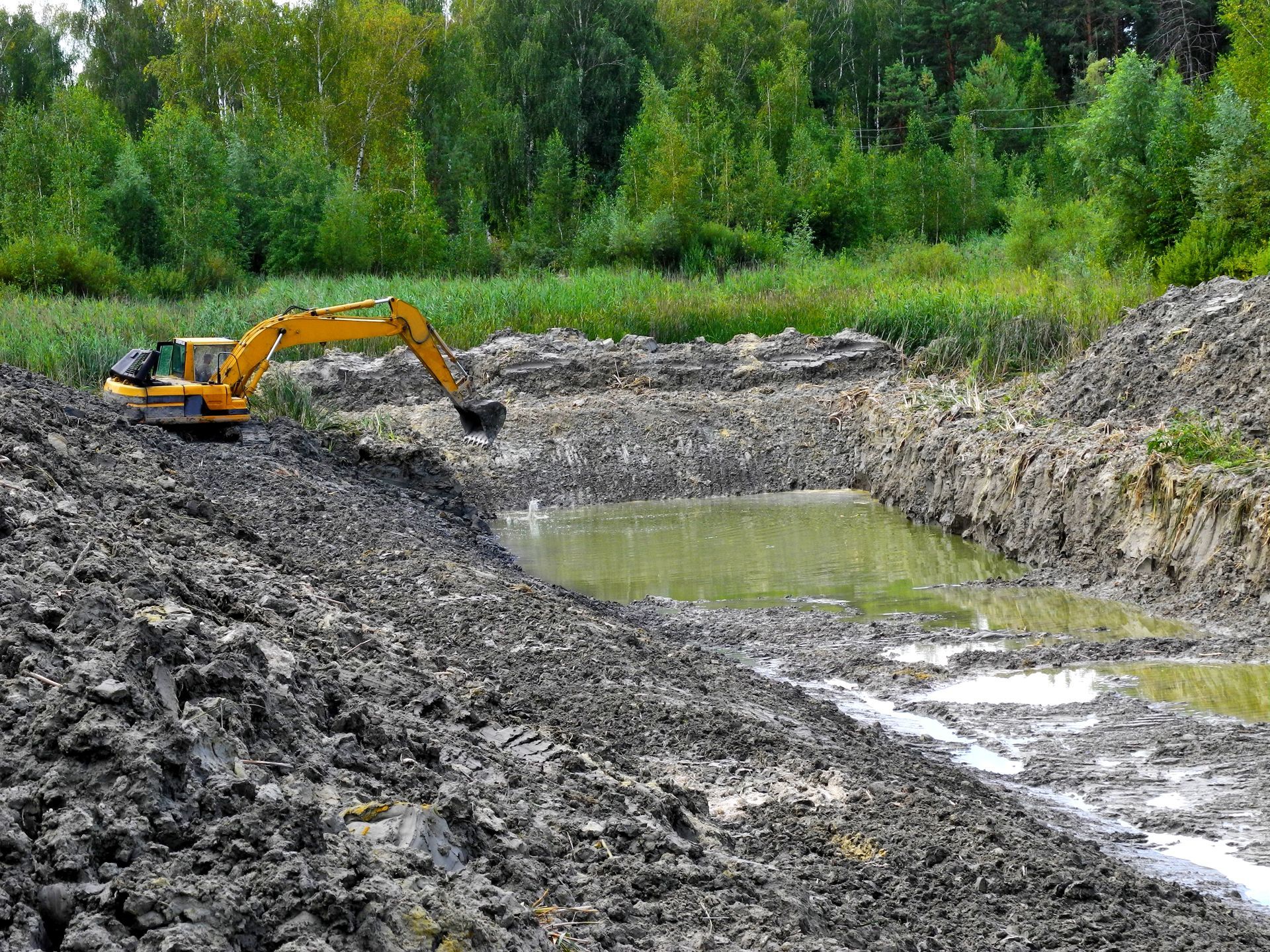
You will see heavy equipment move large volumes of dirt to create the basin, build the dam if needed, and establish the final contour of the pond floor and banks. The excavation depth depends on your intended use, whether that means a shallow retention basin or a deeper farm pond that holds water through dry months. Soil from the excavation is often used to build up the dam or reshape surrounding grade, reducing the need to haul material off-site.
After excavation, the pond bottom is compacted and sealed using soil with the right clay content to hold water. Once the pond fills, you will notice a stable waterline that does not drop rapidly between rain events. Geneva Backwoods Clearing LLC ensures that overflow systems direct excess water away from structures and roads, so flooding does not occur during storm surges. The finished pond will have clean, sloped banks that resist erosion and support safe access for equipment, animals, or maintenance.
Drainage inlets and outlets are positioned based on the surrounding terrain and where water naturally collects or exits your property. This planning prevents washouts and maintains the designed water capacity. The work does not include stocking fish, installing aeration systems, or adding decorative elements beyond the earthwork and water management infrastructure.
What You Should Know Before Starting a Pond Project
These are common questions from property owners in Okmulgee who are planning pond construction and want to understand what the process involves and how long results will last.
What determines whether a pond will hold water long-term?
Soil type and proper compaction of the pond floor determine water retention. Clay-rich soils seal better than sandy or rocky ground, and site evaluation identifies whether additional sealing measures are needed before excavation begins.
How long does it take to complete a pond from start to finish?
Construction time depends on pond size, soil conditions, and weather. A typical farm pond may take several days to a week, while larger retention ponds or projects requiring extensive dam work take longer.
Why do some ponds lose water even after they are dug?
Water loss happens when the soil is too porous or the pond floor was not compacted correctly. Sealing with appropriate soil layers during construction prevents this issue and keeps the pond at a stable level between rainfall events.
When is the best time of year to build a pond in Okmulgee?
Drier months allow easier access for heavy equipment and better soil compaction. Wet conditions can delay work and make it harder to achieve the right grade and seal, though scheduling depends on your timeline and site-specific factors.
What happens to the dirt removed during excavation?
Excavated soil is typically used to build the dam, reshape surrounding areas, or fill low spots on your property. Material that is not needed on-site can be redistributed or hauled away depending on your land use plans.
Geneva Backwoods Clearing LLC works with property owners throughout the planning and construction stages to ensure the pond meets intended use and site conditions. Contact the team to schedule a site evaluation and discuss your pond project in detail.